
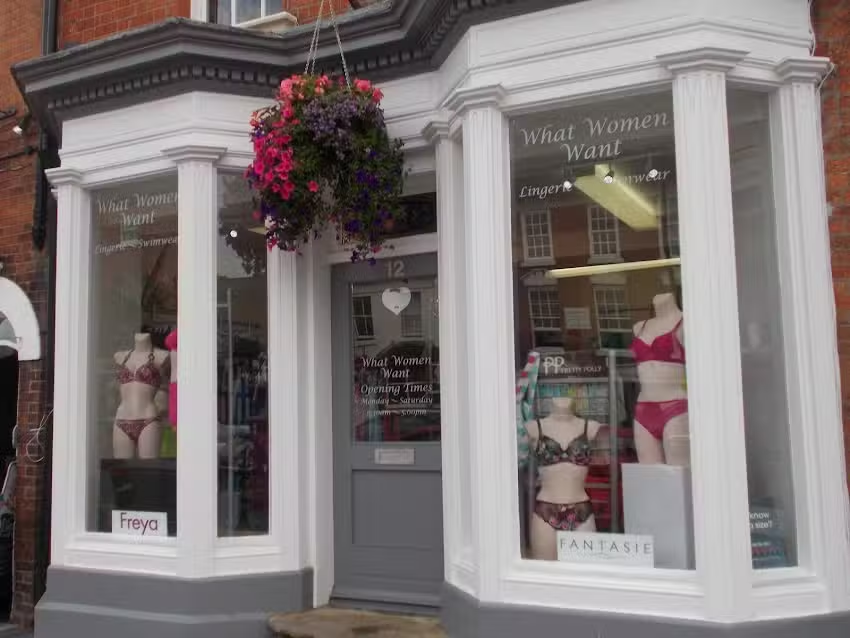
What Women Want
BackA Tale of Two Experiences at What Women Want
What Women Want, for over two decades, was a fixture on Newport's High Street. It wasn't just another clothing shop; it was an institution built on a very specific and personal mission. The story began when its founders, Julie Watkiss and Sandra Ayres, grew frustrated with the lack of local options for supportive and well-fitting bras, particularly for those with larger busts. They found themselves travelling to cities like Chester and Solihull to find suitable lingerie, a journey that ultimately sparked an idea: to create a local hub for women in the same position. In 2004, they opened their doors, establishing what would become, in their words, a "destination shop" for the community. However, after 21 years, the owners announced their retirement, and with no buyer to take the reins, the physical shop has now permanently closed, though it has since found a new life as an online eBay store. The story of its time on the High Street is one of conflicting narratives, showcasing both exceptional expertise and deeply problematic customer service.
The Specialist Fitting Service: A Cherished Expertise
At its best, What Women Want embodied the ideal of an independent boutique. Many customers lauded the business for providing a service that larger chain stores simply could not match. The core of its appeal was the professional bra fitting service. Testimonials frequently describe the staff as excellent, knowledgeable, and capable of creating a comfortable and reassuring atmosphere. One customer specifically contrasted a positive experience here with a poor one at M&S, highlighting the value of specialist attention. She left with a perfectly fitted bra at a reasonable price, feeling confident and well-cared for. Another praised the "lovely lady" who looked after her, helping her find not only correctly sized bras but also swimwear for a holiday.
The expertise extended beyond standard measurements. Some long-term clients noted that the fitting was done by eye, a skill honed over years of experience where an expert can judge the right size and style almost instantly. This level of personal service fostered a loyal customer base, with many women considering the owners and staff to be friends. The product range supported this expertise, featuring a curated selection of respected brands known for quality and support, such as Fantasie, Freya, Elomi, Wacoal, Panache, and Gossard. The shop catered to a wide variety of needs, offering swimwear, nightwear, hosiery, and practical shapewear. Crucially, they also stocked post-surgery and mastectomy bras, demonstrating a commitment to serving all women in their community. This was the version of What Women Want that built an enviable reputation over two decades.
When Service Faltered: A Different Story
Despite the glowing reports from many loyal customers, a significant number of reviews paint a starkly different picture. These accounts point to a severe inconsistency in customer service, where the welcoming atmosphere could quickly evaporate, leaving customers feeling upset and disrespected. One of the most detailed complaints involves a dispute over a return. A customer, who had previously been happy with a fitting, purchased two bras. One of them arrived with marks, making it unsuitable. When she tried to return the marked £43 bra, she was not seeking to blame the shop but simply wanted a refund. The request was met with a defensive attitude. Instead of a refund, she was told she would have to accept a credit note because the item wasn't technically faulty, despite being unfit for sale.
The situation escalated, with the staff member allegedly becoming "very snotty," wobbling her head in disagreement, and speaking to a colleague about the customer within earshot. The refund was eventually processed, but with the parting comment that she was only doing it because she "couldn't deal with this today." The customer left disgusted by the rude and unprofessional behaviour. This experience also shed light on a potentially problematic business policy: the shop claimed their suppliers did not allow them to return items, shifting the risk onto the customer. This incident suggests a rigid and customer-unfriendly approach to problem resolution that stands in direct opposition to the boutique, caring image the shop otherwise projected.
This was not an isolated incident of poor attitude. Another potential client reported visiting the shop with the sole intention of using the measuring service, which she stated upon arrival. When the staff member realised a purchase was not imminent, her attitude allegedly became "horrible." The customer left feeling upset and vowed never to return. These negative experiences suggest that the high level of service was conditional, potentially dependent on the staff member present or the guarantee of a sale.
Reconciling a Divided Reputation
The legacy of What Women Want is therefore a complex one. It was clearly a cherished local business that provided a vital service, especially for those seeking plus size lingerie and expert fittings. The owners built the business from a genuine personal need and fostered a community around it. Yet, the deeply negative experiences cannot be dismissed. They point to fundamental flaws in customer relations and policy that soured the experience for some. It is possible that the celebrated service came directly from the owners, while other staff members did not share the same ethos. Alternatively, the pressure and uncertainty surrounding the shop's closure—as mentioned in one of the reviews—may have led to a decline in service standards towards the end of its tenure on the High Street.
Ultimately, What Women Want was a boutique capable of delivering five-star, personalised care that made women feel seen and supported. It offered a fantastic range of sexy underwear, practical solutions, and specialist garments. However, its reputation was undeniably damaged by instances of inflexibility and outright rudeness. While the High Street chapter has closed with the owners' retirement, the business's story serves as a potent reminder that a strong reputation is built not only on expertise but on consistently respectful and fair treatment for every single person who walks through the door.